
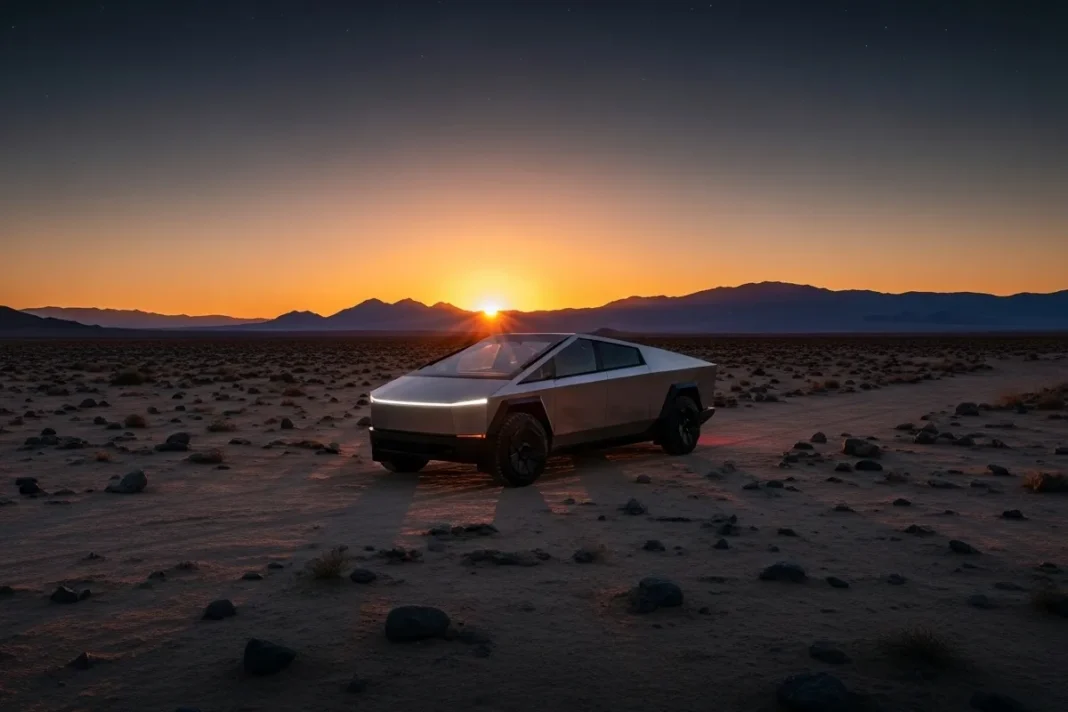
Explore the top five reasons behind the disappointing Cybertruck sales, from initial production flaws to controversial price hikes and the impact of public perception. This article will analyze why the Cybertruck sales have not met the initial hype and what it means for Tesla’s future in the EV truck market.
Table of Contents
Introduction
The story of the Cybertruck Sales was supposed to be a triumph of disruptive innovation, a steel-clad monument to Tesla’s dominance. With over a million reservations and a launch event that shattered the internet, the futuristic pickup was positioned as an industry killer. Instead, the reality has been a masterclass in how to squander unprecedented hype. The initial spectacle has dissolved into a harsh and undeniable truth: the Cybertruck is a commercial failure in the making. What was promised as the future of utility has arrived as an overpriced, poorly constructed novelty item, struggling to find its footing in a market it once aimed to conquer.
This isn’t just about disappointing delivery numbers; it’s a narrative of profound strategic miscalculation. For four years, the market waited, and in that time, Tesla’s promises unraveled. The affordable workhorse for the masses morphed into a luxury gadget for the wealthy, while critical production delays and glaring quality control issues eroded public trust. The vehicle that was meant to redefine the American truck has instead become a case study in brand overreach and a fundamental misunderstanding of the target consumer. The flawed Cybertruck Sales performance isn’t an isolated issue—it’s a symptom of deeper problems within Tesla’s strategy.
This in-depth analysis will deconstruct the five core reasons behind this failure. We will begin by dissecting the production nightmare and quality control crisis that crippled the launch from day one. Next, we will examine the disastrous bait-and-switch price hike that alienated its most loyal reservation holders. We will then explore how the polarizing design sacrificed essential practicality for shock value, how formidable competitors capitalized on Tesla’s delays to redefine the EV truck market, and finally, how brand erosion and the controversial “Musk effect” have further poisoned the well for the struggling Cybertruck Sales initiative.
A Production Nightmare Is Crippling Cybertruck Sales
The most fundamental reason behind the disastrous Cybertruck Sales performance is that Tesla failed at the first hurdle: building the truck itself. The decision to use a thick, unyielding stainless steel exoskeleton was a manufacturing gamble that backfired spectacularly. This material is notoriously difficult to bend and weld with the precision required for mass-market vehicles, leading to immediate production bottlenecks. The consequences are visible in the inconsistent panel gaps and poor finishing that plague early models, undermining the premium image Tesla seeks. This initial inability to efficiently produce the vehicle created a supply-side crisis that immediately throttled the potential volume of Cybertruck Sales, ensuring there was no chance to build early market momentum.
This manufacturing chaos directly translated into a painfully slow production ramp-up, making a mockery of Tesla’s ambitious forecasts. The company’s projections of delivering a quarter-million units annually seem detached from reality when compared to the trickle of vehicles leaving the factory. This isn’t just a minor delay; it’s a fundamental failure of the entire Cybertruck Sales strategy. A product that cannot be produced cannot be sold, and this operational incompetence has severely damaged investor confidence. For a company that once prided itself on production innovation, the botched launch has made the whole Cybertruck Sales initiative appear amateurish and ill-conceived.
Ultimately, the few trucks that do make it to customers have only worsened the public perception and further damaged the Cybertruck Sales outlook. Widespread reports of premature rust spots, malfunctioning software, and critical system failures have fed a powerful negative narrative across social media. These aren’t teething problems; they are foundational quality control failures that poison the well for potential buyers. Each viral video of a flaw acts as potent anti-marketing, making the job of improving Cybertruck Sales exponentially harder as negative word-of-mouth solidifies the vehicle’s reputation as an unreliable, overpriced novelty.

The Bait-and-Switch Price Hike That Killed Cybertruck Sales Momentum
If production failures crippled the supply, the shocking price hike killed the demand. The Cybertruck was introduced to the world with a revolutionary promise: an electric truck for the masses starting at around $40,000. This illusion shattered when the final pricing was revealed, with the entry-level model starting over $60,000—a staggering 50% increase. This wasn’t a minor adjustment; it was a profound betrayal of the initial value proposition that had attracted hundreds of thousands of reservation holders. This bait-and-switch tactic alienated the core demographic of regular truck buyers and enthusiasts who were supposed to drive mass-market Cybertruck Sales, breaking the trust required for any long-term success.
Compounding the damage was Tesla’s decision to launch without the promised affordable base model at all, prioritizing the most expensive, high-margin variants first. This strategic error effectively priced out the average American truck buyer overnight, shrinking the vehicle’s addressable market to a small niche of wealthy tech adopters. By abandoning the one model that had the potential for mass appeal, Tesla kneecapped any chance of achieving high-volume Cybertruck Sales from the get-go. This is a textbook example of a flawed Cybertruck Sales strategy, one that prioritized short-term profit over the crucial goal of building market share in a competitive segment.
Even for those who can afford the steep price, the value proposition is highly questionable when compared to established rivals. Competitors like the Ford F-150 Lightning and Rivian R1T offer compelling features, more conventional utility, and vast dealer and service networks for a similar, if not better, price. When a vehicle is perceived as offering poor value for the money, its sales potential plummets. The consequences of the Cybertruck Sales being viewed as an overpriced and impractical novelty are now clear. To fix this, Tesla needs a serious and immediate rethinking of the Cybertruck Sales approach before its market position becomes permanently damaged.
Alienating the Mainstream: How Unconventional Design Hurt Cybertruck Sales
While its radical, angular aesthetic generated immense media attention, it has proven to be a commercial liability in the real world. The traditional American truck market is deeply conservative, valuing rugged familiarity and proven utility over futuristic theatrics. The Cybertruck’s polarizing “Blade Runner” design is simply too divisive for the average buyer who needs a vehicle that looks at home on a construction site, not on a movie set. This intentionally niche appeal is a primary driver behind the stagnant Cybertruck Sales figures, as Tesla has discovered that shock value doesn’t automatically translate into mainstream market acceptance.
Beyond aesthetics, the design sacrifices critical practicality for its unconventional style, further undermining the Cybertruck Sales pitch. The high, sloping sail pillars make accessing the bed from the side nearly impossible, a daily frustration for anyone who uses their truck for work. Rear visibility is notoriously poor, and the stainless-steel body, while durable against major impacts, is a magnet for fingerprints and shows every minor scratch, making it look unkempt. These functional flaws demonstrate a fundamental misunderstanding of the user, directly impacting the Cybertruck Sales argument for anyone needing a true workhorse rather than a design statement.
This combination of divisive looks and functional drawbacks has cemented the Cybertruck’s public image as a “novelty vehicle” or a rich person’s toy, not a serious competitor. This perception issue is catastrophic for sales, as it completely alienates the lucrative fleet and commercial buyers who are the bedrock of the truck market. Companies need reliable, practical, and unassuming vehicles, and the Cybertruck is none of those things. Without winning over this critical segment, the prospect of achieving robust, high-volume Cybertruck Sales remains a fantasy, highlighting the deep-seated strategic error at the heart of its design.

While Tesla Waited, Competitors Redefined the EV Truck Market
The four-year chasm between the Cybertruck’s announcement and its first deliveries was a fatal strategic error. While Tesla was grappling with stainless steel and generating hype, competitors like Ford and Rivian were executing. They seized the opportunity, launching the F-150 Lightning and the R1T to a market hungry for electric trucks. By offering compelling, available, and more conventional alternatives, they captured crucial market share and normalized the concept of an EV pickup. Their success is a direct consequence of Tesla’s delays, leading to a reality where potential Cybertruck Sales were siphoned off long before the first unit was even delivered.
A direct competitive analysis reveals just how precarious the Cybertruck’s position is. The Ford F-150 Lightning offers the familiarity of America’s best-selling vehicle, backed by a massive, established dealer and service network—a critical factor for truck owners who rely on their vehicles for work. The Rivian R1T carved out the premium adventure niche that Tesla might have once claimed. Both offer more practical utility, standard features, and a less polarizing presence for a comparable price, providing a data-driven explanation for the flawed Cybertruck Sales performance in the face of strong, rational alternatives.
Ultimately, Tesla lost its most powerful weapon: first-mover advantage. That multi-year delay gave competitors a priceless window to establish brand loyalty, gather real-world user data, and solidify their supply chains. The EV truck landscape is no longer an empty field for Tesla to conquer; it is a contested battleground where rivals are already entrenched. Tesla is now the latecomer forced to play catch-up in a market it could have easily dominated. This surrender of leadership has made the path to achieving successful Cybertruck Sales infinitely steeper and more challenging than it ever needed to be.
Brand Erosion and the “Musk Effect” on Cybertruck Sales
The broader shift in public perception of Tesla and its CEO, Elon Musk, has cast a long shadow over the Cybertruck Sales outlook. What once was a beacon of innovation has become, for many, entangled with political polarization and controversial personal statements. This entanglement significantly impacts the appeal to a wide array of potential buyers, particularly the more traditional and often politically moderate or conservative demographic that dominates the truck market. When the brand itself becomes a lightning rod for debate, it inevitably deters a segment of the population, thereby negatively impacting the potential for widespread Cybertruck Sales growth.
Furthermore, the Cybertruck’s journey has been defined by a constant stream of negative press, from the infamous “shatterproof” glass demonstration failure at its unveiling to viral videos showcasing glaring quality issues like rust and misaligned panels. This public humiliation has damaged the vehicle’s credibility before it even had a chance to gain traction. Every widely shared flaw acts as a powerful deterrent, severely undermining any official Cybertruck Sales and marketing efforts. No amount of sleek advertising can counteract a pervasive narrative of poor quality and unreliability, making the task of turning around the Cybertruck Sales figures an uphill battle against perception.
Ultimately, the Cybertruck represents the critical limit of Tesla’s “disruptor” brand strategy. While an unconventional approach worked for early EV adopters and luxury sedans, it has failed spectacularly in the pragmatic, utility-driven truck market. The company’s unique blend of hype, experimental design, and production challenges has not resonated with buyers who prioritize function and reliability. This fundamental misalignment is starkly reflected in the anemic Cybertruck Sales numbers. It suggests that Tesla needs a serious, strategic rethinking of its entire approach to this vital segment, as the consequences of the Cybertruck Sales struggles extend far beyond just one model.

Conclusion
In retrospect, the collapse of the Cybertruck Sales momentum was a predictable outcome born from a series of self-inflicted wounds. Tesla’s internal failures laid the groundwork for its commercial disappointment. The decision to prioritize a difficult-to-manufacture stainless steel body led directly to a production nightmare, resulting in agonizingly slow delivery rates and embarrassing quality control issues that have become viral sensations. This was compounded by a staggering price hike that transformed the vehicle from a promised mass-market disruptor into a niche luxury product, effectively betraying the trust of its most enthusiastic early supporters and gutting its core demand base before the first truck was even delivered.
Externally, Tesla fundamentally misjudged the market it was trying to enter. The polarizing design, while a magnet for headlines, proved to be an insurmountable barrier for the pragmatic, utility-focused truck buyer, cementing the Cybertruck’s reputation as an impractical novelty. This error was magnified by years of delays, which handed a priceless first-mover advantage to more astute competitors like Ford and Rivian. They successfully captured the market with vehicles that understood the assignment: delivering practical, reliable electric trucks without the drama. Coupled with a brand identity increasingly mired in controversy, Tesla’s market entry was both late and out of touch.
Ultimately, the disastrous Cybertruck Sales performance answers the central question of this analysis with brutal clarity: it is a failure of hubris. The Cybertruck is a monument to a company that believed its hype, prioritizing audacious design over manufacturability, practicality, and market realities. For potential EV buyers, investors, and industry analysts, the lesson is clear. To salvage its future in the lucrative truck segment, Tesla must move beyond polarizing spectacles and confront these failures head-on. A fundamental rethinking of the Cybertruck Sales strategy is no longer optional; it is essential for survival in a market that values substance over shock.