
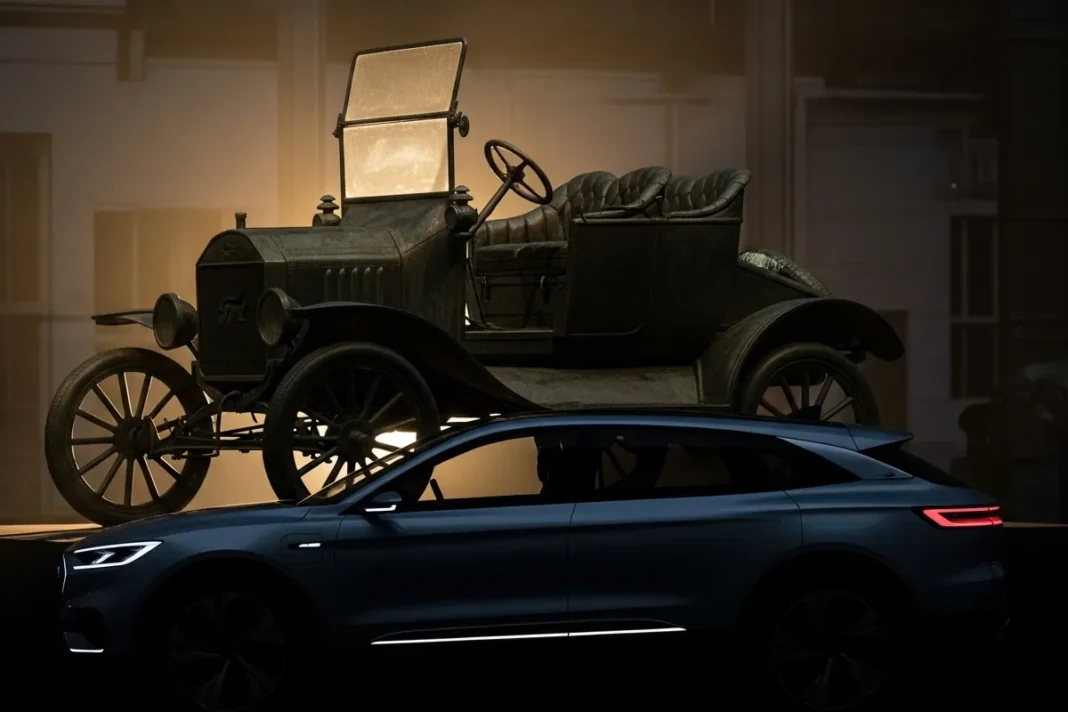
Ford’s “Model T Moment” is here. We decode the strategy behind the Ford Model-E EV platform—a $25k architecture poised to challenge Tesla with US-made LFP batteries. Please read our full analysis.
Table of Contents
Introduction Ford Model‑E EV platform
Over a century ago, the Model T put America on wheels. Now, with its upcoming Ford Model-E EV platform, the company is betting billions that it can do it all over again, this time with electricity. Here at CommaFast, we believe the reveal slated for August 11th in Kentucky is more than just a car launch; it’s Ford’s high-stakes answer to the single biggest problem plaguing the electric vehicle transition: affordability. For too long, the promise of an EV for the masses has remained just that—a promise. Premium-priced models dominate the market, leaving average American families on the sidelines, while a wave of hyper-competitive, low-cost Chinese EVs threatens to flood the global market. Tesla has discussed a more affordable car for years, but Ford is preparing to put one on the road.
This is Ford’s “Model T moment,” and in this deep dive, we’re going to decode their entire strategy. We’ll start by taking you inside the secretive “skunkworks” team in California that was tasked with reinventing the EV from the ground up. From there, we’ll break down the critical technology—especially American-made LFP batteries—that makes a $25,000 price point possible. We will then analyze the three-front war Ford is waging against Tesla, imports, and consumer skepticism. We’ll also explore how this initiative is at the heart of a massive overhaul of the U.S. EV supply chain, revitalizing American manufacturing. Finally, we’ll look beyond the initial compact pickup and SUV to see how this versatile platform could become the foundation for Ford’s entire electric future. Let’s get started.
The “Skunkworks” Genesis: Ford’s Secret Weapon for an Affordable EV
Here at CommaFast, we find that to truly understand the significance of Ford’s upcoming affordable EV platform, you have to look past the corporate headquarters in Dearborn and toward a small, secretive “skunkworks” team in Irvine, California. For the past two years, this hand-picked group of elite engineers—operating as a nimble startup separate from the “Ford mothership”—has been tasked with a monumental goal: to design a low-cost, scalable EV architecture from the ground up. This isn’t just about tweaking existing designs; it’s a fundamental reimagining of how an electric vehicle is conceived and built —a project CEO Jim Farley rightly sees as an “existential threat” if it fails.
Leading this clandestine project is Alan Clarke, a former top engineer from Tesla, who brings a wealth of experience in the lean, fast-paced world of EV startups. His team includes talent poached from other key players like Auto Motive Power (AMP), Rivian, and Lucid, creating a powerhouse of industry knowledge focused on one mission. Farley’s vision is to spark a modern “Model T moment” by empowering this agile group to bypass the inertia that can slow down legacy automakers. The team’s autonomy allows them to “radically reengineer” Ford’s approach to everything from supply chains to manufacturing. By creating this insulated, high-talent incubator, Ford is making a calculated bet that it can replicate the disruptive speed and innovation of its newest competitors. The flexible platform they’ve developed, codenamed CE1, is the direct result of this strategy and will be the foundation for a new family of affordable American-made EVs.
The $25,000 Question: How Ford Plans to Make EVs Affordable
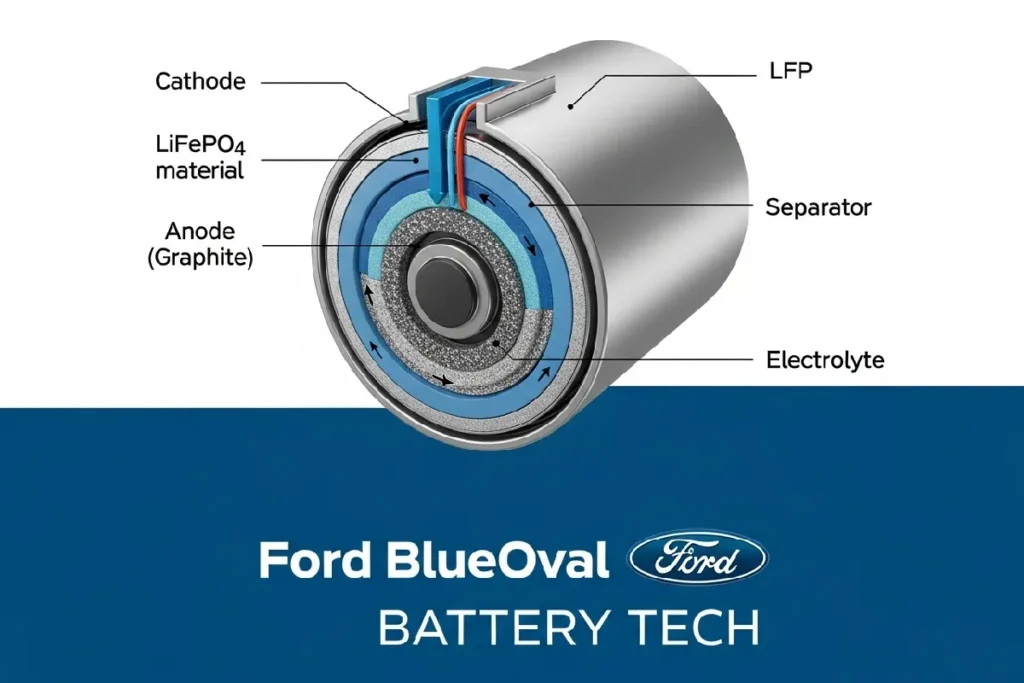
The dream of a mass-market electric vehicle (EV) priced under $25,000 has been a long-standing goal in the auto industry, but achieving it involves navigating numerous challenges. Ford’s approach to realizing this vision is multi-faceted, with a key focus on battery technology. The company is investing $3 billion in Lithium Iron Phosphate (LFP) batteries, which are known for their safety, longevity, and, most importantly, their lower cost—approximately 30% cheaper than the traditional nickel-cobalt-manganese cells used in many current EVs. This strategy represents more than just a change in components; it signifies a fundamental transformation in their approach.
The centerpiece of this strategy is the new, wholly Ford-owned BlueOval Battery Park in Marshall, Michigan. This nearly two-million-square-foot facility is on track to begin producing LFP batteries in 2026, marking the first time a U.S. automaker will manufacture these cells at scale domestically. By bringing this technology in-house and producing it in America, Ford aims to create a stable, low-cost battery supply that will power its next generation of affordable EVs, including a new compact pickup and SUV.
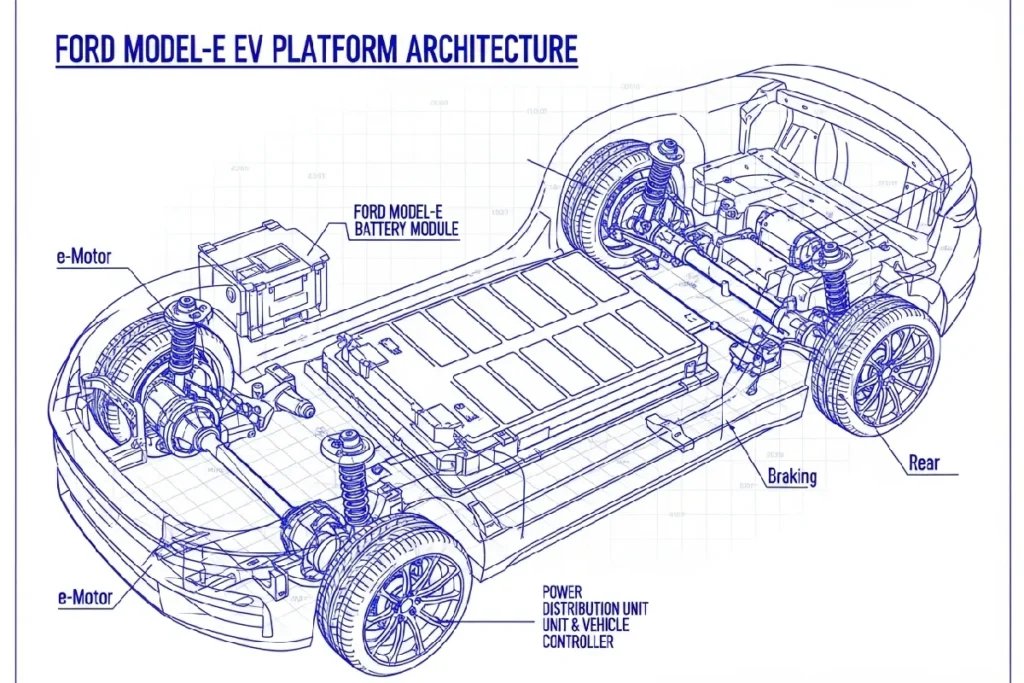
Beyond the battery, Ford’s “skunkworks” team is re-engineering the entire vehicle for cost efficiency. This involves a relentless focus on a simplified chassis, streamlined electronics, and advanced manufacturing techniques designed to reduce complexity and assembly time. By taking a holistic approach—innovating from the battery chemistry to the factory floor—Ford is building a serious and credible plan to finally answer the $25,000 question and deliver an EV for the American masses.
A Three-Front War: Taking on Tesla, Chinese Imports, and Market Skepticism
Ford’s new platform represents much more than just a product launch; it marks the beginning of a strategic three-front battle for the future of the American auto market. One front in this battle is the long-standing competition with Tesla. For years, Tesla has teased the idea of a sub-$30,000 “Model 2,” but it remains only a concept and not an actual vehicle available for purchase. Ford, however, is not waiting. By setting a specific price target of $25,000 with a clear timeline for production—starting with a compact pickup and an SUV—Ford aims to take control of the affordable EV narrative and surpass Tesla in the mass-market segment that it has so far overlooked.
Perhaps even more critical is the second front: the looming wave of hyper-competitive Chinese EVs. Brands like BYD are already dominating global markets with shockingly affordable models like the sub-$10,000 Seagull. While tariffs currently provide a buffer, Ford knows it cannot rely on protectionism forever. This platform is a direct response, an attempt to build a cost-competitive vehicle on American soil. Ford’s strategy is twofold: create a product that can compete on price and leverage its “Made in America” status as a powerful market differentiator. It’s a preemptive strike designed to fortify its home turf before these foreign giants can establish a major U.S. beachhead.
The final, and arguably most important, front is the American consumer. The primary roadblock to widespread EV adoption has consistently been price. Mainstream buyers have been sidelined by sticker shock and lingering range anxiety. A $25,000 EV, built by a trusted American brand, directly tackles this skepticism head-on. By offering a practical, affordable, and domestically produced option, Ford aims to convert hesitation into sales, proving that electric vehicles can, and should, be for everyone—not just early adopters or luxury buyers. Winning this war requires a comprehensive strategy, and Ford’s platform is its all-in-one battle plan.
Revitalizing American Manufacturing: The U.S. EV Supply-Chain Overhaul
The story of Ford’s new platform is fundamentally about American manufacturing. The decision to engineer an affordable electric vehicle (EV) is closely tied to the decision to produce it, along with its core components, right here in the United States. This approach goes beyond patriotic branding; it represents a significant strategic shift aimed at rebuilding domestic industrial strength for the electric age. The scale of this commitment is impressive, highlighted by substantial investments in state-of-the-art production facilities. Take, for example, BlueOval City in Tennessee—a vast, $5.6 billion campus dedicated to assembling electric trucks and manufacturing batteries. Additionally, the BlueOval SK battery parks in Kentucky play a crucial role. These aren’t just factories; they are ecosystems designed to create a vertically integrated and resilient U.S. EV supply chain.
The broader implications for the American economy are immense. This overhaul is about more than just creating thousands of high-tech manufacturing jobs; it’s a deliberate effort to reduce the nation’s dangerous reliance on foreign supply chains, particularly for critical battery materials and components. For decades, the auto industry has outsourced, but now, faced with geopolitical instability and fierce overseas competition, Ford is leading the charge to “re-shore” its future. We see this as a critical move to insulate the company and the country from supply disruptions while capturing more of the economic value of the EV transition.
Of course, Ford isn’t doing this in a vacuum. This ambitious industrial strategy is powerfully enabled by federal policies like the Inflation Reduction Act (IRA), which provides significant tax credits for consumers who buy American-made EVs and incentives for manufacturers who build them. By aligning its corporate strategy with this national policy, Ford is not only making its affordable EV plan economically feasible but is also positioning itself as a central player in America’s 21st-century industrial renaissance.
Beyond the Pickup: The Future of the Ford Model-E EV Platform
We believe that the initial compact pickup and small SUV, which are set to debut on this new platform, are just the beginning. The true brilliance of what Ford’s “skunkworks” team has developed lies not in a single vehicle, but in the platform’s inherent flexibility. This low-cost architecture is designed to function as a versatile “skateboard” chassis, capable of supporting a wide range of vehicle types and sizes—referred to in the industry as “top hats.” This modularity is key to achieving true mass-market scale and profitability, as it allows Ford to quickly develop and launch new models that adapt to changing consumer demands without the need to completely re-engineer each vehicle every time.
Looking ahead, we can easily envision a future where this platform underpins a whole family of affordable Ford EVs. A sleek, efficient sedan priced around $25,000 would be a direct broadside against Tesla’s long-promised affordable car and would re-establish Ford’s presence in a segment it largely abandoned. Furthermore, with the rise of mobility-as-a-service, it’s not a stretch to imagine a purpose-built, durable vehicle designed specifically for the ride-hailing market, optimized for high mileage and low operating costs. This adaptability is what will allow Ford to pivot quickly and compete across multiple fronts.
Ultimately, this platform is much more than just a base for a few new models. We see it as the cornerstone of Ford’s entire mainstream EV strategy for the next decade and beyond. It represents the architectural foundation upon which the company will build its electric future, shaping its product portfolio, manufacturing footprint, and competitive standing in the American auto industry. The success of this platform won’t just be measured by the sales of its first two vehicles, but by the diverse and dynamic range of affordable EVs it enables Ford to bring to market in the years to come.
Conclusion
In wrapping up our analysis, it’s clear that the Ford Model-E EV platform is far more than just a new piece of hardware. Here at CommaFast, we see it as the culmination of a meticulously planned industrial and market strategy. It began with the insight that speed and innovation required a nimble “skunkworks” team, free from corporate constraints. This led to the adoption of cost-effective LFP battery technology, a decision fortified by massive investments in American manufacturing facilities like BlueOval City. This entire apparatus is being mobilized to fight a three-front war: preemptively striking against low-cost Chinese imports, directly challenging Tesla in the affordable segment it has yet to conquer, and, most importantly, winning the hearts and wallets of mainstream American consumers.
Ultimately, the “Model T moment” tagline is not hyperbole; it is the very essence of Ford’s ambition. The company is wagering its future on the foundational belief that the winner of the EV race won’t be the one with the fastest 0-60 time or the biggest touchscreen, but the one who can successfully democratize the technology. By tackling the affordability crisis head-on with a product designed and built in America, Ford is making its most credible threat yet to the established EV hierarchy. This is a calculated plan to reclaim its legacy as the automaker for the masses, leveraging its century-old manufacturing prowess to solve a distinctly 21st-century problem.
For EV strategists, industry analysts, and policy watchers, the August 11th reveal is a critical event to monitor. The focus should not only be on the vehicle’s specs but on the clarity of the production timeline and the firmness of the $25,000 price target. The successful execution of this platform could trigger a seismic shift, forcing competitors to respond and accelerating the timeline for affordable EVs across the board. What Ford is attempting is a complete re-shoring of an industry’s future while simultaneously making its products accessible to all. The battle for America’s electric soul is far from over; in fact, it may have just entered its most decisive phase.